

WARNING: The GEEFT track of the ST2AE Master's programme will not be open in the 2026 academic year. It will reopen in 2027, but only for entry to the first year.
The Environmental Management of Tropical Ecosystems and Forests (GEEFT) track of the International Master's Degree in Science and Technology for Agriculture, Food and the Environment (ST2AE) prepares students to take up the challenges of managing forests in tropical countries by giving them the means to confront forestry knowledge and the ecological specificities of these environments with the socio-economic and political issues of the intertropical zone.
The ST2AE international Master's degree offers a systemic approach to agriculture, the environment and food, and develops a teaching method that is directly linked to the professional sectors. This Master's degree is co-accredited by AgroParisTech, Institut Agro Montpellier and Institut Agro Rennes-Angers.
This course is supported by the GEEFT engineering major at AgroParisTech. More information HERE (in French).
Background and aims
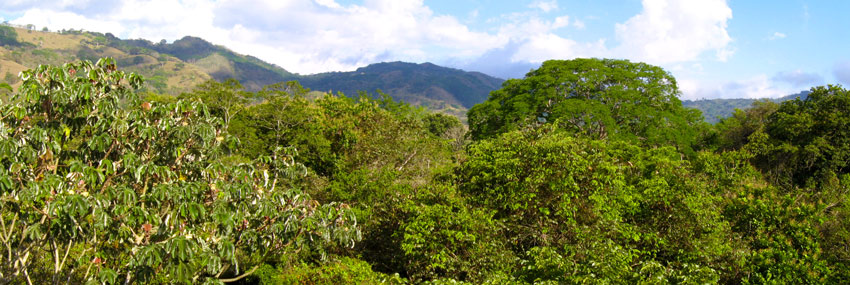
These courses prepare students to meet the challenges of ecosystem management, in particular tropical forest ecosystem management, and enable them to apply their theoretical ecological knowledge to the socioeconomic and political challenges of the intertropical zone. The role currently played by tropical ecosystems in sustainable development processes raises complex issues. Tropical ecosystems are now subject to greater pressure than ever before from the exploitation of their resources and the appropriation of the land. These ecosystems are of local, national and international importance for the environmental services they provide (preservation of biodiversity, regulation of the mechanisms that govern climate change, fight against desertification and regulation of hydrosystems). They are often essential for the survival of the local populations and the fight against poverty and have to meet many conflicting demands that are sometimes difficult to reconcile in situations where state control is often weak.
Managing these ecosystems, therefore, requires, on the one hand, an understanding of the ecological and technical challenges for controlling deforestation and preserving environments, species and ecosystem functions and, on the other hand, an understanding of the major changes in public and private management practices, occurring in an increasingly globalised economy.
Professionals who are confronted by these issues must have a sound educational grounding providing them with knowledge and skills in ecological, forest and agro-forestry sciences as well as in social, economic and management sciences. They need to take account of the many different stakeholders involved in the management of these environments, including local, often underprivileged, populations, the emergence of new forums for discussing management methods which go beyond national and local decision-making scales and the weakening of state control. In order to evaluate the options available for managing these environments, students must develop a critical approach and the ability to innovate in multi-cultural situations.
Managing these ecosystems, therefore, requires, on the one hand, an understanding of the ecological and technical challenges for controlling deforestation and preserving environments, species and ecosystem functions and, on the other hand, an understanding of the major changes in public and private management practices, occurring in an increasingly globalised economy.
Professionals who are confronted by these issues must have a sound educational grounding providing them with knowledge and skills in ecological, forest and agro-forestry sciences as well as in social, economic and management sciences. They need to take account of the many different stakeholders involved in the management of these environments, including local, often underprivileged, populations, the emergence of new forums for discussing management methods which go beyond national and local decision-making scales and the weakening of state control. In order to evaluate the options available for managing these environments, students must develop a critical approach and the ability to innovate in multi-cultural situations.
Admission requirements
For initial training
- For the M1, students with a bachelor's degree in the fields of biological, forestry or agronomic sciences.
- For the M2 programme, students with a 1st year MSc degree in the same fields.
Lifelong learning:
Validation of prior experience and the organisation of the course into credit units make it possible to offer individualised courses, adapted to each situation. The training can be spread out if necessary.
Selection
Selection is made on the basis of applications, depending on the places available. The application form is filled in online from January to March.Internship and thesis
The individual end-of-training internship, which lasts five to six months, gives rise to the writing of a thesis and an oral presentation before a jury. Its objective is to implement academic knowledge and to help the student find a job. It allows the student to carry out work individually, with the benefit of individualised supervision.
The subject can be either a research subject or an operational subject, on one or other of the themes of the course, in response to an order formulated by the hosting organisation. The internship leads to the writing of a thesis and a public defense in front of a jury composed of at least the supervisor of the host organisation, the AgroParisTech academic supervisor and a external examiner.
In order to guarantee the best chances of success, a preparation phase for the internship is planned during the stay in Montpellier. The quality of this preparation is evaluated by a jury and gives rise to the attribution of ECTS credits.
Careers
This GEEFT specialty is designed for students who wish to work abroad in sustainable development dealing with the social management of ecosystems and tropical forests. However, a major part of the course and subjects applies equally to areas outside the tropics.
Potential employers include international organisms, government agencies, local authorities, public establishments, research establishments, forest-environment consultants, audit offices (environmental assessments, environmental certification, carbon trading, etc), natural space management consultants, forestry companies and development or environmental non-government organisations.
The jobs targeted are:
-
Project Manager in international organisations
-
Forest and Environment Officer
-
Forest ecosystem Manager
-
Forestry Planner
-
Academic (Lecturer/Professor) (usually following PhD completion)
-
Researcher (usually following PhD completion)
-
Forest-biodiversity conservation Officer
-
Research and development project Manager
-
Public forest-environment Engineer
Target skills
The objective of this course is to prepare students to meet the challenges of managing forest areas in tropical countries by giving them the means to confront forestry knowledge and the ecological specificities of these environments with the socio-economic and political issues of the inter-tropical zone.
The role of forests in sustainable development processes raises complex issues that are the subject of controversy, debate and international commitments: biodiversity conservation, regulation of climate change mechanisms, control of deforestation, forest-agriculture and agro-forestry interactions, valorisation of wood and non-wood forest products, forest management and regulation of forest exploitation, etc. Professionals who are confronted with these issues need to have a solid training that provides them with knowledge and skills in the fields of biological, ecological and forestry sciences and in the fields of social, economic and management sciences.
The plurality of actors involved in the management of rural and forest areas, the emergence of new arenas of discussion on management methods that go beyond the sole scales of national and local decision making, the irruption of the notion of global common goods, are changing the jobs of forest specialists. They are now at the interface with development sectors and increasingly complex social demands, the role of these professions generally being to clarify possible management choices, taking into account multiple and sometimes contradictory issues.
Target group
- Initial training: Foreign students with a minimum of a four-year degree in the biological, forestry or agronomic sciences.
- Lifelong learning: Employees in the research, agricultural production, consulting and environmental sectors as part of their company's training plan or on individual training leave. The validation of acquired experience and the organisation of the training in capitalisable units make it possible to offer individualised courses, adapted to each situation. The training can be spread out if necessary.
Selection: Selection is made on the basis of applications, depending on the places available. Applications are made online, on the Institut Agro Montpellier website.