
Discover G-ENV’s research themes, the research units its members are affiliated with, and their work on environmental management, ecosystems and environmental public policy.
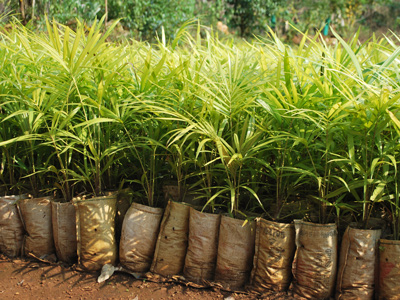
Scientific research is a very important activity of the G-Env Team. Its academics devote half of their time to it; in addition, the team welcomes and supervises doctoral students. This activity provides the team with expertise that benefits students in various disciplines.
The scientific orientations of the G-ENV team are based on three axes structuring its research and teaching activities:
- Analysis of the functioning of tropical continental ecosystems. Ecosystems, particularly tropical forest ecosystems, play a major environmental role: biodiversity reservoir, complex interactions with the climate, regulation of major hydrological cycles, etc.
- Analysis of management practices and strategies for managing the environment and tropical ecosystems based on the link between social and management sciences and environmental sciences
- Evaluation of environmental management systems and associated policies, particularly for the management and governance of tropical ecosystems. This work focuses more specifically on the actual conditions of implementation, and their effective contributions to better ecological performance...
- the "Montpellier Recherche en Management" (MRM) laboratory, which brings together all of Montpellier's strengths in the field of management science research,
- the "Knowledge, Environment, Society" (SENS) research unit, which studies "the societal dimension (including social, economic, political and cultural issues) of current environmental dynamics".
- the "Functional Ecology and Biogeochemistry of Soils and Agro-Systems" (Eco&Sols) research unit, which seeks to better understand the ecology of tropical and Mediterranean agro-ecosystems.
The teacher-researchers of the G-Env team are involved in three research units:
 Montpellier Research in Management (MRM)
"Montpellier Research in Management" Laboratory
Today, MRM is made up of some 220 members, including 112 permanent professors and 105 doctoral students and research engineers.
The MRM - Strategic Management group focuses on four themes:
- strategic management of alliances and coopetition
- strategic management of innovation
- strategic management of the environment
- strategic management of supply chains.
Contact :Dr Maya LEROY
Responsible for the team MSE "Strategic Management for the Environnement", Group Strategic Management, MRMmaya.leroy @ agroparistech.fr
 Knowledge, Environment and Society (SENS)
"Knowledge, Environment and Society" research unit- SENS -
The UMR SENS scientific project is based on two observations. The first is the accelerating and increasingly complex tensions between the development trajectories of societies and the transformations of nature. The second is the changing expectations of societies, expressed through changes in individual behavior, the logic of pooling and patrimonialization, and mobilization in the face of injustices exacerbated by environmental crises. The aim is not only to analyze these social issues, with a particular focus on rural societies in the South, but also to propose and support the emergence of new forms of governance.
In addition, the members of UMR SENS adopt a reflexive approach aimed, on the one hand, at embedding their research, training and international partnership activities in a science-policy-society dialogue, and on the other hand, at focusing attention on the co-construction of knowledge linking environment and society.
The UMR pursues these objectives through four themes:
Contact :Dr. Alexandre GAUDIN
Lectureralexandre.gaudin @ agroparistech.frCoralie CALVET
Lecturer and researchercoralie.calvet @ agroparistech.fr
 Functional Ecology and Biogeochemistry of Soils and Agrosystems (Eco&Sols)
Research Unit "Functional Ecology and Biogeochemistry of Soils and Agrosystems" (Eco&Sols)
Eco&Sols is a joint research unit with 70 permanent staff members involving INRAe, IRD, Institut Agro Montpellier and CIRAD.The aim of the work conducted at Eco&Sols is to improve understanding of the role of soil and plant organisms, as well as the interactions between them and with their environment, in biogeochemical cycles - mainly C, N and P cycles - within soils and agro-ecosystems.
The biogeochemical cycles of carbon (C) and nutrients (N and P) are mainly studied in Mediterranean and tropical agrosystems. The different components of the soil (clay particles, aggregates, pores, etc.), the plant (roots, stems, leaves, fruits) and the atmosphere are studied in these cycles. The nature of biotic and abiotic determinants of C and nutrient fluxes is studied in various agronomic contexts subject to climatic and land-use changes. The whole range of supporting and regulating ecosystem services, their trade-offs and the resilience of agro-systems to climatic or land-use changes are taken into account.
- management of organic and mineral inputs: forms and methods of application
- introduction of high-performance genotypes (plants, symbiotic organisms)
- use of multi-species stands (of perennial or annual plants) (with different methods of association and exploitation)
- other agro-ecological practices (no-tillage and sowing under plant cover (SCV), organic farming, agroforestry, RCW (ramial fragmented wood), zaï, etc.).
Contact :Dr Raphaël MANLAY
Lecturerraphael.manlay @ agroparistech.fr